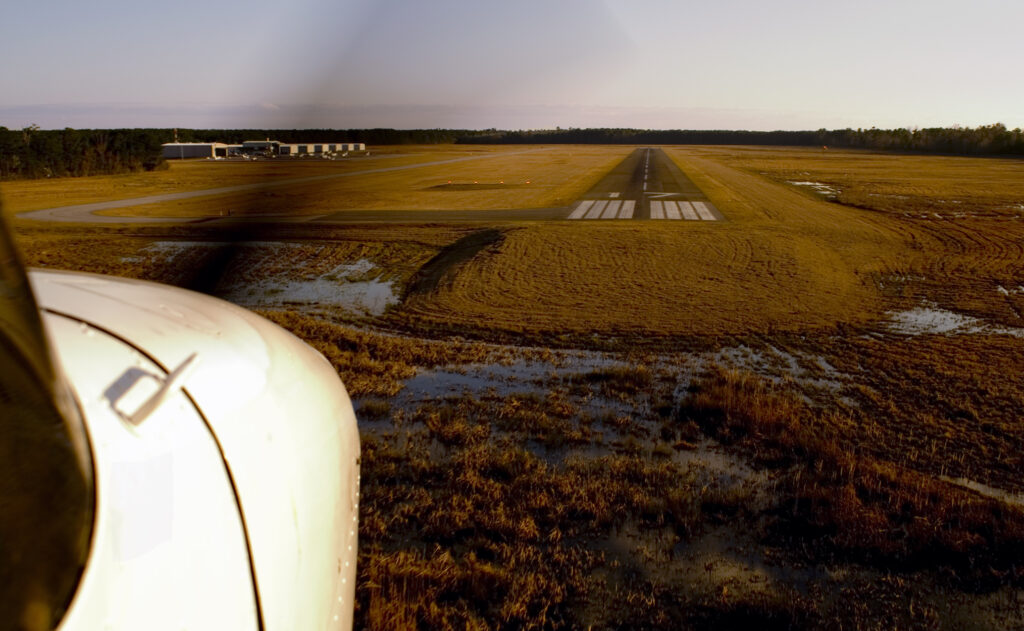

As Microsoft Flight Simulator continues to redefine realism in the sim world, a noticeable trend has emerged: more virtual pilots are turning away from the mega hubs and flocking to regional and general aviation (GA) airports. Whether you fly a business jet, a turboprop, or a Cessna 172, smaller airports offer a more intimate, flexible, and immersive experience.
At Glide Slope Studios, we believe these airfields are the unsung heroes of American aviation — and they’re finally getting the attention they deserve.
Why Sim Pilots Are Flying Smaller
Something is compelling about leaving behind the crowded terminals of JFK or LAX to instead fly into a well-modeled regional airport. General aviation and regional fields offer unique challenges — from non-towered operations and shorter runways to terrain-driven approaches and low-visibility conditions.
Here’s why simmers are making the switch:
- Shorter, more frequent flights: Perfect for those who can’t dedicate 2–3 hours to a whole cross-country route.
- More realism: Many real-world pilots train and fly out of these exact airports.
- Better performance: Regional airports tend to be more efficient in terms of system resources, resulting in smoother and more stable flying.
- Stronger immersion: Less crowded airspace and detailed scenery can create a more believable and satisfying environment.
Real-World Relevance
In the U.S., the vast majority of airports are regional or general aviation (GA)—focused rather than major airline hubs. Whether it’s charter operators, medevac services, business aviation, or weekend flyers, these airfields represent the backbone of day-to-day American aviation.
When a simmer flies into a handcrafted GA airport in Microsoft Flight Simulator, they’re often experiencing something closer to real-world general aviation than when flying into the top 20 airports by traffic.
That’s why our work at Glide Slope Studios focuses on recreating these environments with a high degree of accuracy — from signage and night lighting to hangars and terminal layouts. We want to bring you the exact detail you’d expect from a flagship international hub, but scaled to match the airports most simmers use.
Community Demand for Detail
There is a growing demand from the MSFS community for developers to move beyond basic default renditions and deliver richly detailed, regionally accurate sceneries. Virtual pilots want:
- Authentic markings and taxi signage
- Realistic FBOs and hangar placements
- Correct runway slopes and lighting
- Proper airport metadata that plays well with AI traffic and ATC tools like BeyondATC and SayIntentions
We’ve seen incredible enthusiasm for regional sceneries that reflect real-world counterparts — especially from those who fly corporate jets, bush trips, or use virtual airline tools.
What’s Next for Regional Airports in MSFS
The future is bright for regional and GA airport development. More developers — including our team at Glide Slope Studios — are investing time and energy into building out these essential parts of the virtual aviation ecosystem.
As AI traffic tools improve, flight planning apps get smarter, and community demand grows, these smaller fields will no longer be an afterthought. They’ll be the preferred destinations for serious sim pilots looking for variety, realism, and challenge.
If you haven’t yet ventured beyond the major hubs in MSFS, we encourage you to explore your nearest general aviation (GA) airport. You might be surprised how rewarding — and immersive — it can be.